
Food sensitivities
-
in Blogs
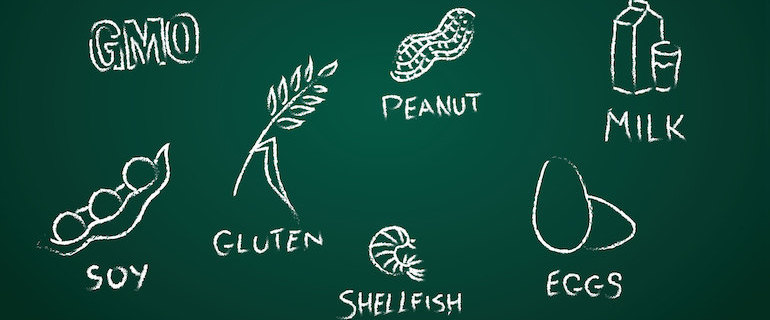
With regards to foods that could potentially be detrimental to your health, there are various terms floating around that need to be explained. Food allergy is actually a pretty immediate response to a food, which can in some cases even be life threatening. The best example would be a peanut allergy, which has reached very high levels of incidence in the UK - every school teacher now has to have an epipen in their classroom in case of an anaphylactic reaction.
In contrast, food sensitivities are delayed, less obvious responses to food, but which over time can become erosive to health - symptoms may include bloating, reflux, IBS symptoms, irregular bowel movements, headaches, skin conditions (acne, eczema, psoriasis etc), asthma etc. It can be very difficult to identify food sensitivities because of the delayed response, but there are a few methods, which I’ll mention in a minute. Finally, food intolerances constitute components of food that we can’t digest properly - the best known one is lactose intolerance, which means that you don’t have the ‘lactase’ enzyme in sufficient quantities to break down lactose. Most people of Chinese descent have this problem and we can now actually genetically test for susceptibility to lactose intolerance.
To test for food sensitivities, we are looking for an IgG test (not an IgE, which is immediate food allergy). Your blood will be paired with a large list of foods and the immune reaction (or lack of) noted. That food will then be classified as safe for consumption, or as causing a mild, medium or strong response. IgG tests are quite expensive, so we have an alternative method, which is completely free - it is just onerous in time and requires a lot of mindful awareness.
The elimination-challenge test goes like this: take the suspect foods out of your diet for ideally three weeks and notice if your health symptoms improve. Then, one by one, reintroduce the foods into your diet and write a log of symptoms - does a particular symptom or set of symptoms become worse when that food was introduced back into your diet?
Like most other things in our body, food sensitivity testing is not a black or white science. Yes, there are certain foods that are life-long ‘no-no’s’ for some people, but for most of us, it is a dynamic situation. The way you react to food is extremely dependent on your sources of food and your digestive capabilities.
As an example of sourcing: wheat products generally cause me to bloat nowadays - one slice of South African bread, even if it says ‘health’ or ‘low-GI’ will leave me uncomfortable for hours. However, when I travel to rural Greece, I can pretty much eat their rustic bread daily for two weeks straight. Why? Because they use old fashioned flour. The same applies to certain specialist bakers here - I found out last week that Dan, who is our camera guy for 12 Steps to Wholesome Nutrition, bakes sourdough bread with Heritage flour for the Organic Emporium shop in Bryanston (owner Debbie Loggan was our guest speaker this week). I’ve now been eating his bread without complaint.
The same applies to milk, which is also a common sensitivity. Ask yourself these questions:
- - Is it milk from an intensively reared feedlot cow or a grass fed one?
- Is it A1 or A2 milk (which contains a different kind of casein protein)?
- Is it raw or pasteurised (raw still contains the immune components from the cow)?
- Has it been fermented by traditional means, into yoghurt, kefir, or lassi (fermentation breaks down the difficult to digest proteins (e.g. casein) and sugars (lactose), effectively pre-digesting it for our guts)?
With regards to our digestive health:
- - Are we secreting enough stomach acid and digestive enzymes to actually break down these difficult-to-digest foods?
- Is our gallbladder secreting enough bile to break down fats?
- Do we have enough probiotics (friendly bacteria) in our guts compared to unfriendly microorganisms (which could cause a whole host of gastrointestinal symptoms)?
- Are we moving our bowels one to two times every single day?
Food for thought - literally….